
Transcript
Announcer:
You’re listening to On the Frontlines of ATTR-CM on ReachMD. And now, here’s your host, Dr. Steve Jackson.
Dr. Jackson:
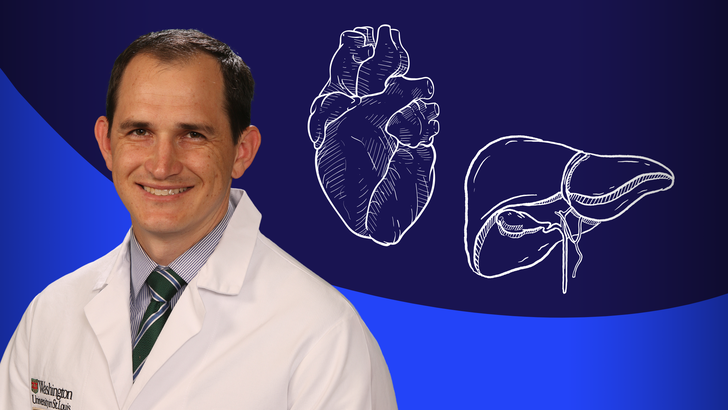
This is On the Frontlines of ATTR-CM on ReachMD. I'm Dr. Steve Jackson, and today I'm joined by Dr. Joshua Mitchell to discuss new study findings on patient and provider treatment preferences in transthyretin amyloid cardiomyopathy, or ATTR-CM. Dr. Mitchell recently helped lead a study that focused on patient and physician perspectives in the setting of a changing landscape for ATTR-CM, which was recently presented at ISPOR. In addition to being an Associate Professor of Medicine, Dr. Mitchell is also the Co-Director of the Amyloid Center of Excellence at Washington University School of Medicine in St. Louis.
Dr. Mitchell, welcome to the program.
Dr. Mitchell:
Thanks, Steve. It's great to be here and to have the opportunity to focus on our research on patient preferences in the ATTR landscape.
Dr. Jackson:
And it's great to have you. For some background, Dr. Mitchell, how has the treatment landscape for ATTR-CM evolved in recent years, and how are those changes influencing conversations between patients and providers?
Dr. Mitchell:
As many of our listeners may be aware, the treatment landscape has changed drastically over the last several years. Before 2019, there was no treatment that was FDA-approved for ATTR-CM. In the last couple of years, we've had two additional treatments approved for a total of three. That is excellent because it really gives us choices that all have shown significant improvement in cardiovascular events and significant improvement in survival in these patients.
It does make it a little bit more difficult sometimes to figure out the best option for patients and make sure that we're tailoring our treatment to their preferences. In discussing treatment preferences with patients, some things may resonate more with some patients than others. Some patients may have already seen commercials on TV. They may have read data themselves about the potential benefit of one medicine over another. They may be more or less convinced by comparative stabilization data among the stabilizers, as an example.
And so when I review the treatment preferences for them, I always review their interpretation of the data and how it might resonate with them, in addition to how much of a difference it does or doesn't make for them when it comes to the route of administration, whether it's the one pill once a day or two pills twice a day, etc. And so having this full discussion and then on the side, dealing with insurance, all of that ultimately goes into the preference decisions in our shared decision-making.
Dr. Jackson:
What were the key questions your team wanted to explore through this study? And how did you go about capturing the perspectives of both patients and cardiologists?
Dr. Mitchell:
Our main goal was to really understand the patient voice. What was the patient feeling as they were going through this? It can really be a lot of information to take in when first getting the diagnosis. Some of these patients were completely healthy before they started having signs of amyloid, and their life may have changed drastically. And as amyloid is a multisystem disease, it can affect lots of different organ systems, and so patients can deal with heart effects, and they can deal with joint effects. We wanted to know what they wanted out of their treatment and what their goals were. And we wanted to be able to compare and contrast that with what cardiologists’ goals were.
And in order to be able to best set this up, we set up a couple of different focus groups—one for nine patients and one for ten cardiologists. We asked them their perspectives on treatment goals and on treatment options, including mechanisms or methods of administration, to compare the different ones that are out there—some of these treatments are pills, and some of them are injections—and understand what was driving patient and physician goals and decisions with the different options that are out there now.
Dr. Jackson:
Now, let's dive into your findings, starting with treatment goals. What outcomes did patients and cardiologists prioritize, and where did you see any similarities or differences?
Dr. Mitchell:
This is always very interesting when thinking about outcomes. Usually, physicians really prioritize mortality. And in this space, since a lot of our patients are elderly, many physicians often assume that patients may value quality of life more than they value mortality. But across the board, both patients and physicians did put survival as top. And heart failure hospitalization was another big key area.
One of the areas where they differed significantly is cardiologists could have cared less whether there were imaging markers for stability of disease or lab tests for stability of disease, but the patients really appreciated that. The patients wanted to see that their medications were working and that it was making an effect, and they saw that as having lab tests or imaging tests that showed that things were stable. And so that was one of the main differences in the priorities of patients and cardiologists.
Dr. Jackson:
For those just joining us, this is On the Frontlines of ATTR-CM on ReachMD. I'm Dr. Steve Jackson, and I'm speaking with Dr. Joshua Mitchell about a recent study on treatment preferences in ATTR-CM.
Dr. Mitchell, when it comes to treatment administration preferences, can you tell us about your findings on how patients and physicians think about convenience and dosing frequency?
Dr. Mitchell:
Yeah, this is one of the areas I thought was really interesting because I think a lot of us bring preconceived notions to this. And so I might think one particular mechanism is the easiest, and someone else might have a different idea. In general, unsurprisingly, patients and physicians preferred whatever the simplest approach was, but that might differ from one patient to another. One patient may really prefer one pill once a day. One patient may prefer an injection every three months. But what’s important about the research is having that conversation. And some patients did not care at all how many pills they might have to take; they were happy to take as many pills as needed. Everyone brings something else to the table, and so you don't know what drives that patient or what the patient may want until you talk to them. There's also a real sense among the different patients and cardiologists that finding a mechanism or a method that worked best for the patient was really important to improve compliance. Now, all of our treatments work well, but being able to match that treatment to the patient is certainly important to make sure those patients are able to remain compliant with their prescription.
Dr. Jackson:
And beyond treatment characteristics, you also explored barriers to care. What stood out to you the most about challenges participants identified across the ATTR-CM journey?
Dr. Mitchell:
Some of the barriers I'm very familiar with as an amyloid specialist. It can be tough, number one, to diagnose the disease. These patients often go to many different providers and specialists before they finally get their diagnosis. Once they get their diagnosis, depending on who they're seeing, there can be some difficulty in prescribing. It's much easier to prescribe these days, but because of the cost of these medications, you do have to have someone familiar with the system to be able to get through insurance many of the times. Those things I at least knew going in, but it was still helpful to hear back from cardiologists and patients what the current state of the landscape was.
One thing that stood out, to me at least—and again, it wasn't surprising, but it really was good to highlight—is how the patients felt through all of this. And many times, they felt like they had to be their own advocates because the doctors they're seeing don't know what's going on. And they're teaching their doctors about many of the things that they're going through, and they're dealing with joint aches and joint pains and those types of things. But their main provider is a cardiologist who may be focused on their heart, and so they often feel lost at times dealing with some of these extracardiac manifestations of the disease.
It was also really important to recognize the emotional and mental burden that these patients can be under through this whole journey, and I think that recognizing that is important for the treatment team to be able to best care for this patient as they navigate this.
Dr. Jackson:
And finally, given these findings, how can clinicians ensure they're not just treating the disease but also aligning treatment decisions with what matters most to their patients?
Dr. Mitchell:
I think these findings are really important to make sure that the provider is having a discussion with the patient, and that notably is tough. At most healthcare centers, certainly ours, you have a 15-minute return visit, and you have a 30-minute new visit. That is not a lot of time to go over a multi-symptom disease, and sometimes we have to make sure we're using extenders, including nurses, nurse coordinators, and advanced practice providers, to be able to fully treat the patient and take the time that we need to understand what they need. And I think when we talk about treatments, there are excellent treatments out there. Making sure that we're aligning to what the patient wants and their goals of care can be helpful, especially in developing a patient-physician relationship and alliance.
Dr. Jackson:
And that's a great way to finish our discussion. I want to thank my guest, Dr. Joshua Mitchell, for joining me to discuss these important findings on patient and clinician preferences in ATTR-CM care.
Dr. Mitchell, it was great having you on the program.
Dr. Mitchell:
It was great to be here, Steve. Thank you.
Announcer:
You’ve been listening to On the Frontlines of ATTR-CM on ReachMD. To access this and other episodes in our series, visit On the Frontlines of ATTR-CM on ReachMD.com, where you can Be Part of the Knowledge. Thanks for listening!

